Tuesday, July 23, 2024

The Second leg of Kashi Yatra – Prayagraj, Ayodhya, Varanasi, Gaya

After completing the first leg of Kashi yatra, i.e. Dhanushkodi, Rameswaram and nearby temples as an addition, the second leg started a month afterwards.  Went from Mumbai by Banaras Express and reached Prayagraj Chheoki next day late night.  

Prayagraj

The sand named Veni Madhava which was kept in puja room and taken to Prayagraj. After performing Veni Madhava puja along with other rituals, went to Triveni Sangam in a boat where the sand brought from Rameswaram was dissolved. Veni is given as Daan by cutting a portion of hair of your better half.  Veni Daan is performed only at Triveni Sangam. Like three rivers confluence here, a woman’s braid has a pattern formed by three strands of braids of hair, a little portion is offered into the holy waters of the Sangam. This is the point where the brown water of the Ganga meets the green water of the Yamuna, along with the mythical Saraswati, which remains unseen but believed to run underground. After Veni Daan, bath with your better half is taken at the sangam. Then proceed to do the remaining rituals like Shrardha, etc.

Sangam, Prayagraj

After a break of two hours, visited other places like Nag Vasuki Temple, which is located on the north of Sangam in the northern corner of Daraganj on the Ganga bank. It has statues of Nag Raj, Ganesh, Parvati and a reclining statue of Bhishma Pitamah. There is a Shiv temple in the premises. Lalita Devi Temple, located in Mirapur locality. It is counted among the 51 Siddha Shaktipeeth in the country. Alopi Devi Temple located in Alopibagh locality west of Daraganj. In the sanctum sanctorum of the temple there is a round platform there is a coloured cloth below which there is a small cot. Devotees pay obeisance here. It is said to be one of the Shaktipeeth. Veni Madhav Temple located in Daraganj locality and has attractive idols of Radha and Lord Krishna. There are 12 Madhav deities in Prayag but the Veni Madhav temple at Daraganj close to the Sangam is especially significant.

Vasuki Mandir, Prayagraj
    

Lalita Devi Temple, Prayagraj

Bade Hanuman temple, is a must visit place in Prayagraj. It is located very close to Sangam and Hanumanji is in lying position instead of being in sitting or standing form as is common in thousands of other Hanuman temples in India.  There is also Shankar Vimana Mandapam which was built on the initiative of Shankaracharya Chandrashekharendra Saraswati of Kanchi Kamakoti Peeth and was inaugurated by Shankarachrya Jayendra Saraswati in 1986. This three-storied structure is made on 16 huge pillars on the bank of the Sangam. Its height is 130 feet and it was completed in 16 years. It has the idols of Kamakshi, Lord Balaji and Lord Shiv. The Shiv idol weighs 10 tons.

Bade Hanuman, Prayagraj

Alopi Devi Mandir, Prayagraj


There are many places of interest in Prayagraj which you can visit if you have time. https://prayagraj.nic.in/places-of-interest/

Ayodhya

10 second bliss. Jai Shri Ram. Generations wait ended in flat 30 minutes. Joined the line and came out in 30 minutes. Separate line for ladies and gents. In Gents line, be on the right side line only. The extreme right line is for ladies only. For some distance ladies only but near the entrance of the main temple you can switch over and change to extreme right line. This is the nearest to the Ram Lalla and get more darshan time as you come out.  Do not take mobile, bags, belt, watches, etc. If you want to carry mobile, add at least 30 minutes for depositing and taking back. Chappal stand also takes time. Water bottles will be chucked out at the security check.

Ayodhya Mandir
Saryu River, Ayodhya

Hanuman garhi also crowded but you can carry mobile. As I have left mobile at the room itself no photo of Hanuman garhi Mandir. Vikramaditya got a temple constructed which later on came to be known as Hanuman Garhi. It is believed that Lord Hanuman (Pavan Putra) lived here to guard Ayodhya. You will find here a beautiful idol of Bal (young) sitting on lap of Maa Anjani at the main temple.

You can visit Kanak Bhavan, Dashrath Mahal, Sarayu River Front, Lata Mangeshkar Chowk, etc. after visiting Ram Lalla. Dashrath Mahal in Ayodhya is at a distance of 50 meters from Hanuman Garhi and attracts many due to its beautiful architecture and elite standards. Kanak Bhawan is to the north-east of Ram Janam Bhumi, Ramkot, in Ayodhya. Kanak Bhawan is one of the finest and famous temples in Ayodhya and is a must visit. It is believed that this Bhawan was gifted to Devi Sita by Kaikei immediately after her marriage to Lord Ram. This is private palace of Devi Sita and Lord Rama. Vikramaditya got it renovated. Later it was rebuilt/renovated by Vrish Bhanu Kunwari which exists even today. The main idols installed in the garbhgrih (sanctum), are of Lord Ram and Devi Sita.

Hanuman Garhi, Ayodhya
Kanak Bhavan, Ayodhya

Left Ayodhya for Varanasi in the morning.  Rain God greeted with showers on the way and in Varanasi.  Tried to have darshan of Kashi Vishwanath, but due to Holi celebrations, the crowd was too much and hence decided to have darshan in the early morning next day.  We had darshan of Visalakhsi Maa.

Ganga Arti at Dashashvamedha Ghat

The Ganga Arti at Dashashvamedha Ghat viewed from boat is a different experience altogether. Aarti starts at around 7.00 pm and goes on for around 45 minutes. There are no entry charges for the aarti. Depending on the space availability and the time one has reached the ghat one can witness the aarti. Boats are available from nearby ghats, in fact the moment you enter the area (i.e. road going towards the ghat), one would find many boatmen selling the boat ride both on seat basis or lumpsum hire basis in case of small boats. Haggling works here and one has many options in boat ride i.e. witnessing the aarti and then cruising the river Ganga, mostly just a glimpse of various ghats -Manikarnika ghat onwards to Assi ghat.


Ganga Arti, Dashashvamedh Ghat, Varanasi

The Arti started probably in 1991 and it has been continuing since then with the exception during COVID period when the Arti continued but without gatherings. The Ganga Arti is broadcast in loudspeakers and displayed in the LED screen and performed by 7 young priests denoting sapta rishis all facing the River Ganga. The priests start to move the many layered huge brass lamp in a clockwise direction in a rhythmic manner. The whole atmosphere is magical and an unique experience.

Next day morning we had darshan of Kashi Vishwanath and Annapurani inside the temple complex. After performing ritual at a place of convenience near our stay started for our next halt Gaya

Ma Visalakshi Mandir, Varanasi 

Gaya

Historically, Gaya was the part of the ancient Magadh Empire. The city is located on the bank of Falgu River and is considered among one of the most sacred cities for Hindus. But the river has no flowing water. Hence, the Pinda is not dissolved in the river but given to cows.  The Pinddanam is done at three places here. First on the banks of Falgu River, Vishnupad Temple and at AkshayVat, A peepal tree standing on the bank of Falgu River worshiped for its divinity.

Shri Vishnupad Temple, Gaya

The most attractive destination in Gaya is Vishnupad Temple. The temple is located on the bank of Falgu River and has footprint of Vishnu incised into a block of basalt. People believe that Lord Vishnu killed Gayasur by placing his foot on Gayasur’s chest. The old temple of Vishnupad was later renovated by the queen of Indore, Devi Ahilyabai in eighteenth century.

Bodhgaya

Bodhgaya is one of the most important and sacred Buddhist pilgrimage center in the world. It was here under a banyan tree, the Bodhi Tree, Gautama attained supreme knowledge to become Buddha, the Enlightened One. Born in the foothills of the Himalayas as a Sakya prince of Kapilvastu (now in Nepal), most of the major events of his life, like enlightenment and last sermon, happened in Bihar.

Mahobodhi Temple, BodhGaya

There is a magnificent Mahabodhi temple and the Tree from the original sapling still stands in the temple premises. The temple is an architectural amalgamation of many centuries, cultures and heritages. While its architecture has a distinct stamp of the Gupta era, it has later ages inscriptions describing visits of pilgrims from Sri Lanka, Myanmar and China between 7th and 10th century AD. It is perhaps still the same temple Hieuen Tsang visited in 7th century.  The temple stands in the east to the Bodhi Tree. Its architectural effect is superb. Its basement is 48 square feet and it rises in the form of a slender Pyramid till it reaches its neck, which is cylindrical in shape. The total height of the temple is 170 ft. and on the top of the temple are Chatras which symbolize sovereignty of religion. Four towers on its corners rise gracefully giving the holy structure a poise balance. This sacred edifice is like a grand banner unfurled by time to proclaim to the world the pious efforts of the Buddha to solve the knots of human miseries, to ascend above worldly problems and to attain transcendental peace through wisdom, good conduct and disciplined life. Inside the temple, in the main sanctum, there is a colossal image of the Buddha in sitting posture touching the earth by his right hand. In this posture the Buddha accomplished the supreme enlightenment. The statue is of black stone but it has been guilted by the devotees. The entire courtyard of the temple is studded with large number of votive stupas. These stupas are of all sizes built during the past 2500 years ago.

After the visit to Bodhgaya, started our journey back to Varanasi and reached past midnight.

Varanasi
Started our rituals in boat at five ghats, (Panch Ghat), and performed Dampati Puja.  After a break, had darshan at Sankat Mochan Hanumanji, Kal Bhairav, Sozhiamman and other temples in Varanasi.

Manikarnika Ghat, Varanasi


Started our journey back next day morning from Banaras.

Ayodhya Temples Photos courtesy: respective official website

Monday, March 4, 2024

The first leg of Kashi Yatra – Dhanushkodi & Rameswaram

Kashi, the holy city holds a special place in Hindu Religion. For Hindus or for that matter any person who do yatras to holy places, Kashi Yatra is a significant one. The yatra starts with a pilgrimage to Rameswaram, where Lord Rama did pooja to Lord Shiva, Shri Ramanatha Swami in Rameswaram Temple.

Dhanushkodi

One has to take Sankalpa (after taking bath without using soap in a dharmshala/hotel room/house in the morning) at Dhanushkodi sea shore. The priest will draw a Dhanush (bow and arrow) in sand and do Sankalp. Then take a dip at the sea and without using any dry cloths make 3 lingams out of the sand where the Sankalp was done. They are named, Sethu Madhava, Veni Madhava (in centre and the bigger lingam) and Bindhu Madhava.  After Aavahana and Puja, Sethu Madhava and Bindu Madhava lingams are dissolved/ consigned in the sea and Veni Madhava is to be taken to Kashi in an appropriate vessel (the material differs at Kshetras where it is intended). The sand named Veni Madhava to be dried in shade one or two days at home and kept in puja room till one takes it to Kashi.

Dhanushkodi

Rameswaram
Then with the same wet clothes, you can proceed to the North Entrance of the Temple from where you can take holy dip of 22 theertha inside the temple. A person will take the water from the well/theertha and pur it over you. Proceed to the next well until the last one which is well organised. Change to the fresh vastra at the dress changing place or at the priest’s place afterwards, as per convenience perform Theertha Srardha for one’s ancestors there either as a full or as a Hiranya Srardha ceremony with five Brahmin priests. After Srardha, Bhoj is offered to the priests along with karta and family.

Rameswaram East Entrance

Rameswaram is one of the twelve Jyothirlinga temples, where Shiva is worshipped in the form of a Jyotirlingam. The Ramanathaswamy temple with its magnificent, imposing structure, long corridors, aesthetically carved pillars, the temple is adorned with a towering 38-metre ‘Gopuram’. The temple itself was built by rulers since the 12th century with Sethupathy Maravar beginning the construction of the grand Ramanathaswamy temple that boasts of the ‘Third Corridor’, completed by his successor, Maravar – the longest one in Asia with a 197-metre span from East to West and a 133-metre span from South to North, the third largest in the world! It is said that Swamy Vivekananda offered prayers at this temple in 1897. It is also one of the twelve Jyothirlinga temples, where Shiva is worshipped in the form of a Jyotirlingam.

Famous Third Corridor, Rameswaram

Lord Rama is also believed to have sanctified this place by worshipping and glorifying Lord Shiva before embarking on constructing the 'bridge' with the help of vanara sena, and hence marks the confluence of Shaivism and Vaishnavism and is thus revered by both Shaivites and Vaishnavites alike. There is a strong belief that bathing in the 22 ‘Theerthas’ or natural springs inside the temple complex is a step forward in enlightenment. Rameswaram has rightly been declared as one of the National Pilgrim Centres in the count.

Nearest railway station: Rameswaram. At present trains run upto Ramanathpuram / Mandapam only as bridge construction work across the strait and redevelopment of Rameswaram railway station is going on.

Temple Timings: 
4 am to 5 am - Puja
5 am to 6 am - Devotees allowed for ticketed darshan of spatika lingam
6 am to 12 noon and 4 pm to 8 pm - Devotees allowed (normal as well as ticketed)
Bathing at 22 theerthams aka wells - ticketed from North Entrance of the temple

Tiruppullani: Temple Timings: 7:00 am – 12:30 pm and 3:30 pm – 8:30 pm
The temple is at a distance of 12 km from Ramanathapuram, is an ancient temple dedicated to Athi Jaganatha Perumal (Lord Vishnu), is 44th of the 108 Divya Desams of Vaishnavites. It is believed that King Dasaratha performed a Yagna, in want of a child, so people who do not have children come to this place praying for blessings to have a child.

Tiruppullani

It is also believed that Lord Rama while on his way to Lanka to fight Ravana, had requested Samudra Raja, the God of Ocean to allow a way through the ocean to Lanka. Lord Rama had offered prayers lying on Kusa grass; which is known as Dharba Sayanam.

Thiru UttaraKosa Mangai: Temple Timings: 6:00 am to 11:00 am & 4:00 pm to 8:00 pm
The nearest railway station is that of Ramanathapuram at a distance of 18 km. Lord Shiva is in his self-manifested form (Swayambulinga) at this temple. The majestic Nandi in the outer precinct is known as Pradosha Nandi. This temple town is believed to be the place where Lord Shiva transferred the secrets of Vedas to Parvati. The idol of Nataraja made out of emerald is an uncommon sight not found in any other temple. It is known as Maragadha (emerald) Natarajar wholly smeared with sandal paste. The sandal paste is removed only once in a year to perform abhisheka.

Thiru UttaraKosa Mangai

There is Sthal Vruksha - Jujube Tree/Ber Tree/Elandai Maram - which is centuries old. (Below left) The extensive renovation work is being carried out in the temple. (Below right)


Second Leg will continue...


Friday, June 30, 2023

Land of High Passes - Ladakh 2016

The Ladakh trip was organised by Nature India in July-end of 2016.  I had a narrow miss of my flight to Delhi, as it took about 5 hours for a 50 km distance from home to airport in Mumbai. How I reached the airport and boarded the flight is a different story. Now the report.

“Land of high passes” or "The Moon land" whatever you call it, Ladakh, is the most remote region of India, a barren, virtually rainless region. The annual rainfall is in the range of 100-120 mm. A cold desert due to its location in high altitude Ladakh gets water from Indus (Sindhu) River. Indus river is fed by the melting glaciers on the mountains. The mind-blowing landscapes and the rugged mountains greet you as soon as you land in Leh (3500 meters above sea level), the capital of Ladakh. The mesmerizing beauty of this place has to be felt to believe. Serenity at its best.

View from plane 

While proceeding on any type of tour in Leh Ladakh region, do not forget to carry along with you water bottles, energy drinks / bars, chocolates, dry fruits (Almond/Pistachio/Apricot). As the climate of Ladakh is extreme at both ends of the scale, also carry sun glasses, sunscreen lotion, moisturizers as well as winter wear viz. Thermal (inner) wear is a must, Jacket, Monkey cap, Gloves, woollen socks etc. and some essential medicines with you.

First and the most important thing is your physical fitness when undertaking the tour to Ladakh region. Because of the special terrain, one needs to take a rest of at least minimum 24 to 36 hours after landing in Leh-Ladakh as acclimatization procedure in the high-altitude area. As there are no forest covers or trees in Ladakh, oxygen is less. And rest is compulsory to acclimatise at this level. Also be advised not to sleep during the day, as sound night sleep is also very important.... so, bring books to read, watch movies, or chat with long lost friends / family on mobile / laptop.

Roads seem to be never ending with mountains of different colours and hue as if somebody has painted or doodled on it. Sometimes Monasteries will greet you. Famous amongst them are Hemis, Thiksey, to name a few. Border Roads Organisation, (BRO) doing an excellent job in maintaining these roads in severe and adverse conditions. Army camps are also plenty. A Big salute to the Army for the untiring effort in keeping the borders safe and to BRO for repairing the roads instantly after a landslide or boulder falling instance is reported.

Once can see many "La" and "Tso" in Ladakh. La means Pass and Tso means Lake. Once you leave Leh for Nubra Valley via Khardung La pass (one of the highest motorable road in the world - 17582 ft above sea level), Pangong Tso via Chang La pass (another highest motorable road in the world – 17585 ft above sea level), Tso kar, Tso moriri via Taglang La pass (another highest motorable road in the world – 17480 ft above sea level) or Hanle (250 km road alongside the river Indus – Upshi, Kiari, Nyoma are the towns you cross on the way), the panoramic views you experience during your ride are out of the world. Do plan your departure with sufficient time gap after your tour as natural calamities like land slide, etc. can stuck up your return plan to base camp at Leh. So, plan accordingly and enjoy one of the most panoramic tours you can think of.

War Memorial at Hall of Fame Museum at Leh, Ladakh

Indus river, Leh, Ladakh

On way to Magnetic Hill, Leh

Leh City Post Office

Night View of Leh Main Bazaar 

Hemis Monastery founded in 17th Century.  Annual Hemis festival takes place on the 10th and 11th day of the 5th Lunar Calendar. Hemis has more than 200 branch monasteries in the Himalayas and is an important living monument and heritage of Himalayas and its people. One of the best Honey, Lemon, Ginger Tea I had in a long time. There are variety of tea you can have at Hemis Restaurant, Hemis Monastery, Ladakh.

Maitreya Statue – Statue of the Future Buddha, Thiksey, Ladakh

The 12 meter (40 ft) high statue took 3 years to build, with 30 people working continuously. It is made of clay and terracotta brick painted with gold. The murals behind the statue tell the story of the Future Buddha. On the right side opposite the door are paintings of Thiksey Rinpoche’s lineage. On 26.7.1980, His Holiness the Dalai Lama consecrated the statue. The image you see is the portion as seen from upper floor.

Magnetic Hill (Gravity Hill), #Ladakh


The layout of the area and surrounding slopes creates an optical illusion that the downhill road is actually an uphill road. Objects and cars on the hill may appear to roll "uphill" in defiance of gravity when they are, in fact, rolling downhill.

Himalayan Marmot

Himalayan Marmot, from mammal class is found in the upper reaches of the Himalayas. Mostly visible in the mountainous regions of #Ladakh and Bhutan.

Yak

Yak is a long-haired animal found throughout the Himalayas, the Tibetan Plateau and as far north as Mongolia and Russia. Most yaks are domesticated. Wild yaks are generally dark, blackish to brown, in colour. However, domestic yaks can be quite variable in colour, often having patches of rusty brown and cream. They have small ears and a wide forehead, with smooth horns that are generally dark in colour.

Thiksey Monastery, Leh


Sunset at Pangong Tso

Pangong Tso

View of Pangong Tso
Common Merganser at Pangong Tso

Pangong Tso (Lake) - Known for sheer natural beauty, Pangong can easily be termed as one of the most picturesque places in the World! ......Best seen in evening, this place is a paradise for landscape photography. Birds seen here are; Brown-headed Gulls, White-winged Tern, Common Merganser, Bar-headed Geese, Lesser Sandplover, etc. The ones you see in the photo are Common Merganser

World's third highest motorable road, Changla Pass


Another World's highest motorable road - Taglangla Pass (Tanglangla Pass)

Tsokar Lake


Tsokar" means salty lake in local language. Here the waters are alkaline. This is probably the best birding place in Ladakh... Famous for Tibetan Wild Ass & endangered Black-necked Cranes, this place is also known for breeding of Bar-headed Geese & Ruddy Shelducks. Other birds here include Great-horned Lark, Snowfinch, Twite, Great Rosefinch, Raven, Little Owl, Tibetan Sandgrouse, Hill Pigeon, Common Kestrel, Bar-headed Geese, Brown-headed Gulls, Red-crested Pochard etc..

Wolf Trap, Tsokar

This is wolf trap, Tsokar. Locals build it in such a way that it looks like a pot. Upper portion converges so that when a wolf which is preying on their livestock, lured with a dead animal, it can't get out due to its design. The wolf is stoned to death later.

Tso Moriri Lake

Tso Moriri is the largest High altitude lake in Himalayas, situated at 4,595 m (15,075 ft.). Also called as Tso Moriri Wetland Conservation Reserve. Among birds, Bar-headed Geese, Brown-headed Gulls, etc. breed here in large number. On your left is China border at 60 km. Exactly at this spot on the right, we saw Streaked Rosefinch

Horned Lark

Horned Lark with breakfast. Black and white head pattern with black mask, "horns" and band across crown. Black breast-band and sandy upperparts are its identification. It is a resident of High Himalayas.


Indus River

Indus river after a spate of 10 minutes rain, on way to Hanle, Ladakh. We came to know at Hanle that it was heavy rains. Annual rainfall in Ladakh is in the range of 100 mm to 150 mm. We on this part of India should be grateful to Rain God.

Pashmina goats


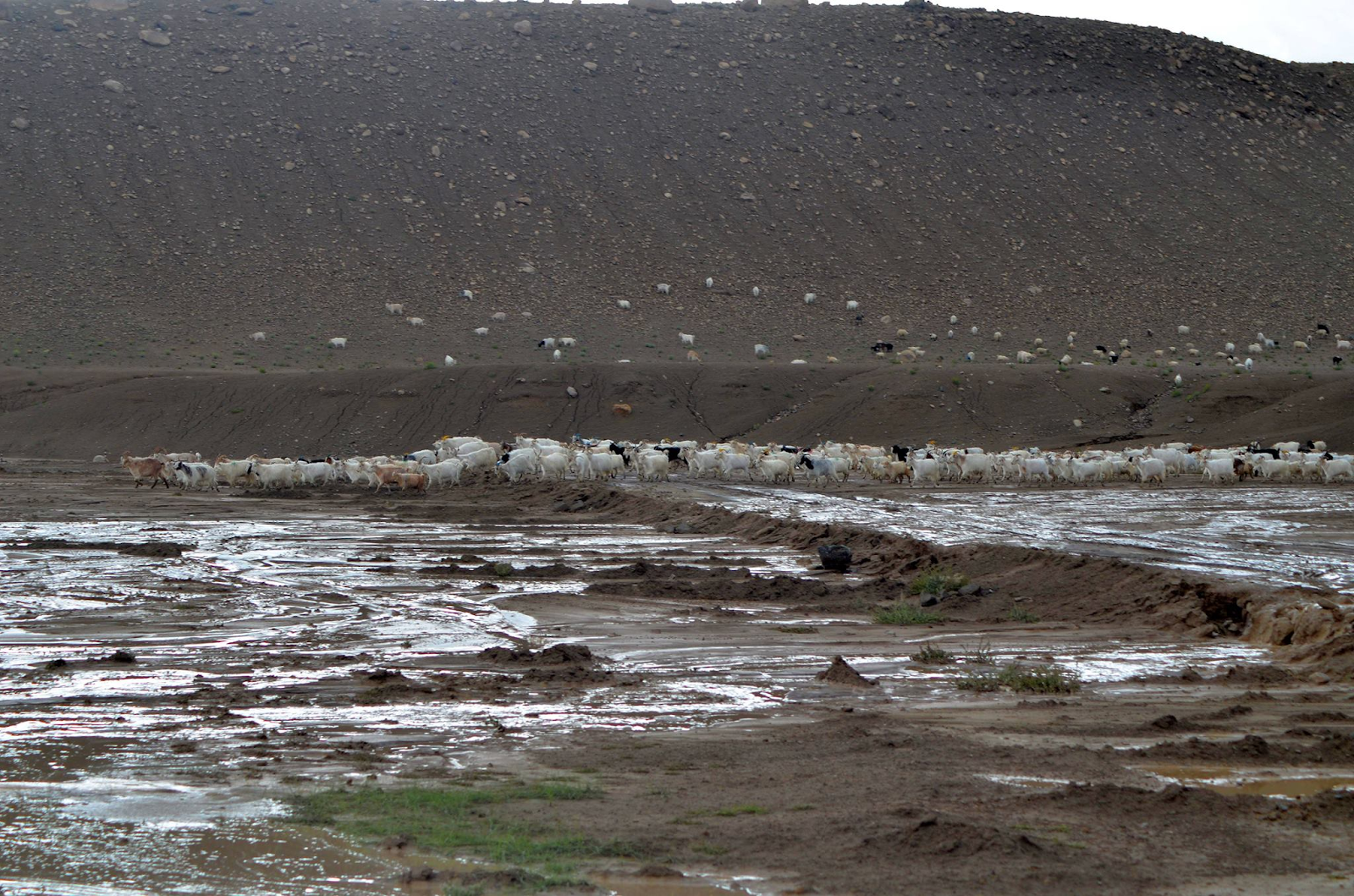
Pashmina (Changthangi) goats returning back near Hanle. This is where two of the three vehicles stuck due to the 10 minutes rain fall which dumped so much of slush on the road. The driver of the first vehicle in which we were, went back on foot and had a pep talk with other two drivers who eventually joined us after a while.

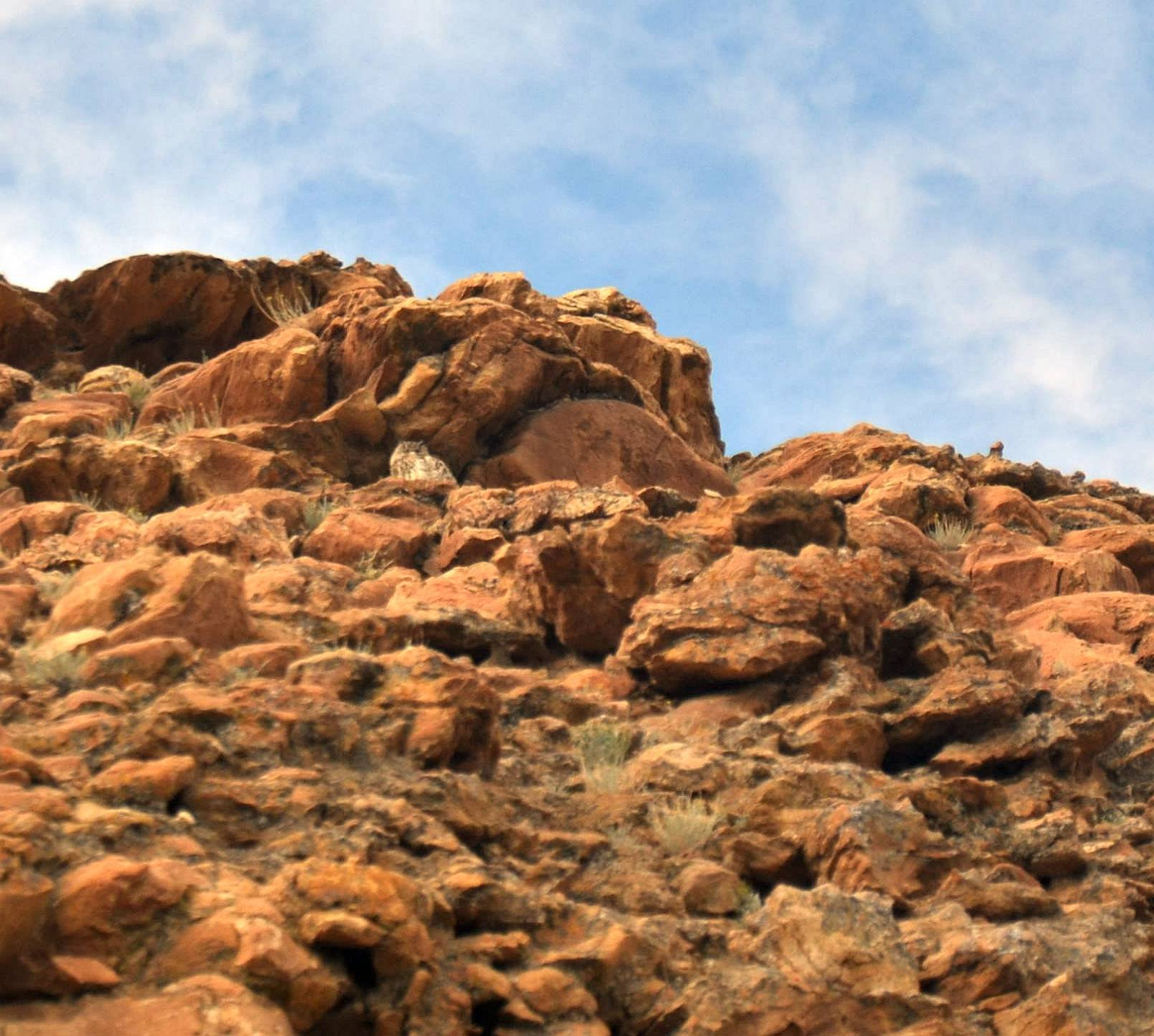
Eurasian eagle owl, Hanle

Photographer's nightmare. Earlier night I tried my luck with 18-105 mm lens and some manual settings to take night view of stars as tutored by Sumukh Deodhar. He also warned to reset all the settings immediately so that next morning venture will be hassle free. All done. But in the morning forgot to change the lens to 70-300 mm. Left with same lens. That's why could not capture this beauty more closely. Eurasian Eagle Owl, resident of Baluchistan hills, Himalayas and Arunachal above 1800 meters. Very large with upright ear-tufts. breast heavily streaked. Cliffs and open rocky areas are its habitat. 

Sun set at Hanle

Monastery at Nyoma

Upland Buzzard
Upland Buzzard breeds in Ladakh. Longer winged and longer tailed than Himalayan Buzzard. Soars with wings in deeper V. Has a combination of large white primary patch on upperwing, greyish white tail. underparts with dark brown streaking, brown thighs. Open country in hills and mountains are its habitat.

Western Kiangs crossing the Indus river near Hanle

Blue sheep crossing a stream, Ladakh

Much water has flown over and now Ladakh has become a union territory. Umling La has taken over the mantle of the highest motorable road at an height of over 19000 ft.